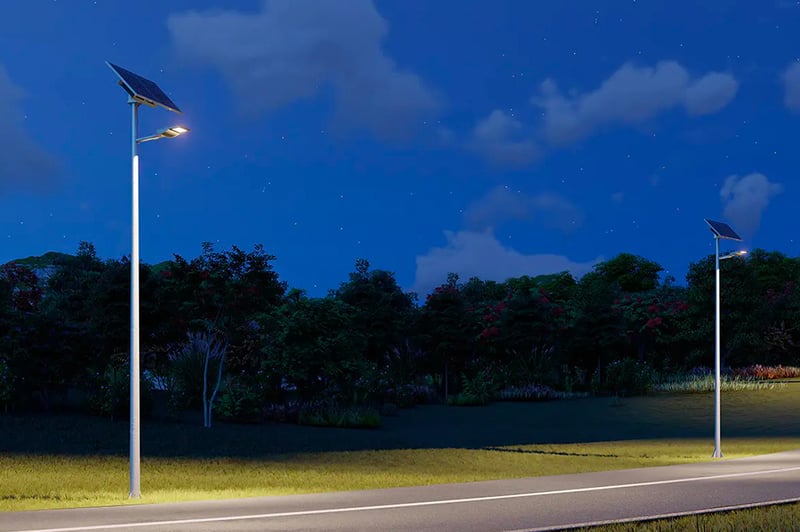
Every month your electricity account gets a little heavier, and every few weeks the lights go off whether you paid or not. Meanwhile, the sun rises over South Africa roughly 3,000 hours a year — free, reliable, and completely indifferent to tariffs and outages. Solar street lights are how you put that sunshine to work on your street, your yard, and your balance sheet. Here's why making the switch is one of the smartest upgrades you can buy this year.
1. You Stop Renting Light and Start Owning It
A grid-connected street light is a subscription: you pay for every hour it burns, forever, at whatever tariff the municipality sets next year. A solar street light is a purchase: once it's installed, the energy it uses costs nothing at all. Over a five-year life, a single 100W grid light burning twelve hours a night can quietly consume more than R7,000 worth of electricity — while its solar equivalent consumes exactly zero.
2. Load Shedding Simply Doesn't Apply
Grid lights die with the grid. Solar lights don't even notice the schedule. Because each fixture carries its own panel, battery, and controller, your lighting stays on through every stage of outage — which is precisely when dark streets become dangerous streets. For homes, estates, businesses, and farms, that independence is worth more than the energy savings.
3. Safety You Can See and Feel
Consistent lighting changes how a place feels after sunset. Residents walk, children play, shops trade later, and opportunistic crime moves elsewhere. Solar street lights deliver that safety without waiting for municipal budgets or grid connections — and they keep delivering it during outages, when conventional lighting fails exactly when you need it most.
4. Light Where the Grid Has Never Reached
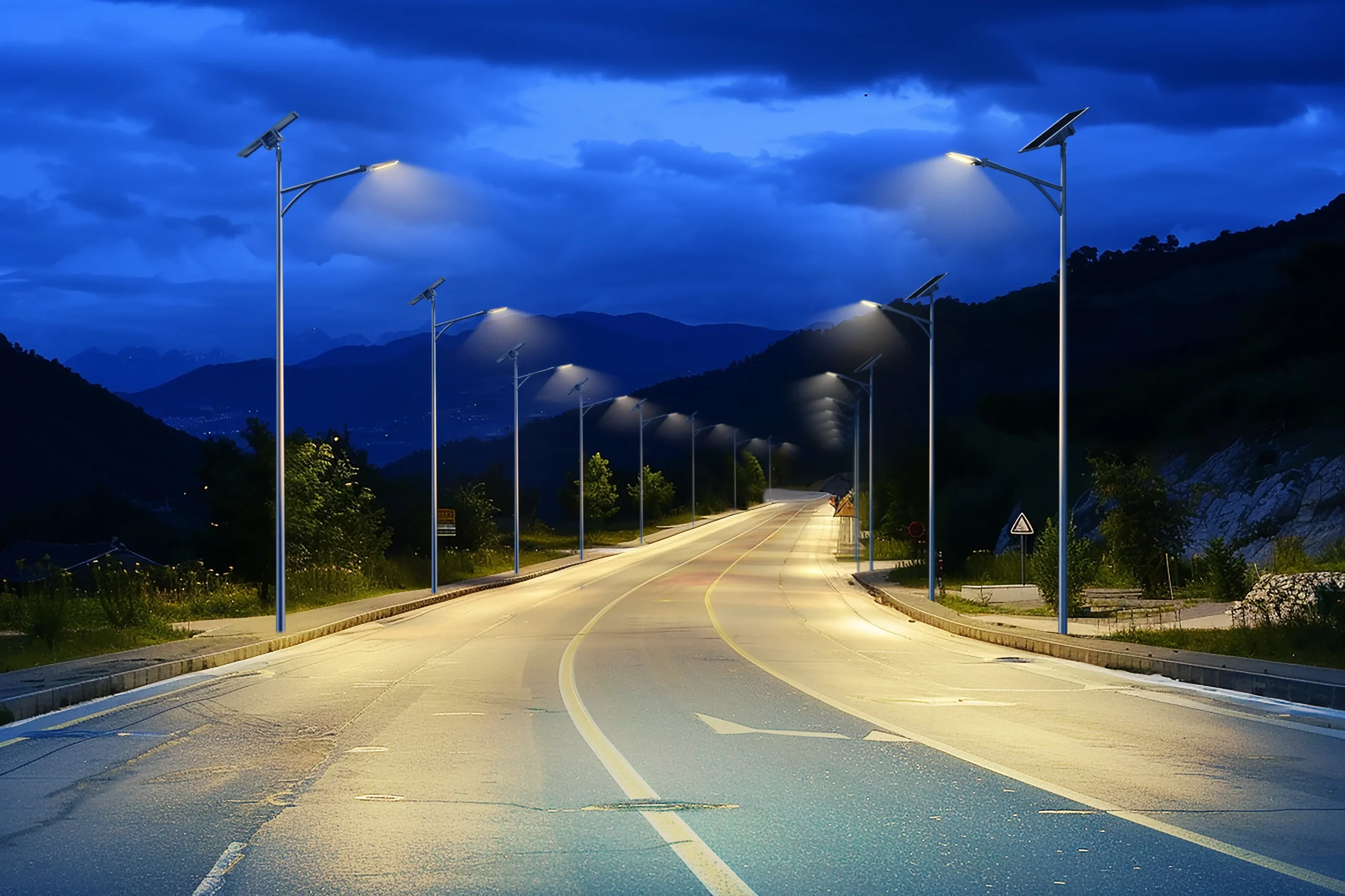
Farm boundaries, mining camps, coastal paths, new developments, rural communities: extending mains power to these places can cost more per point of light than the entire lighting fixture. Solar street lights arrive pre-powered. If the sun reaches the spot, the light can work there — no trenches, no cables, no years-long utility queues.
5. The Numbers Look Better Every Year
Solar isn't just morally green, it's financially green. Compare the true five-year cost of owning each type of light and the gap is hard to argue with:
| 5-Year Cost Per Light (Typical) | Solar Street Light | Grid Street Light |
|---|---|---|
| Electricity (12 hrs/night) | R0 | ± R7,500+ |
| Trenching, cabling & connection | None | R2,000 – R5,000 |
| Lamp & ballast replacements | None (50,000 hr LED) | 3 – 4 changes |
| Maintenance call-outs | Rare | Regular |
| Estimated 5-year total | Once-off purchase | 2–3× more expensive |
6. Set It and Forget It
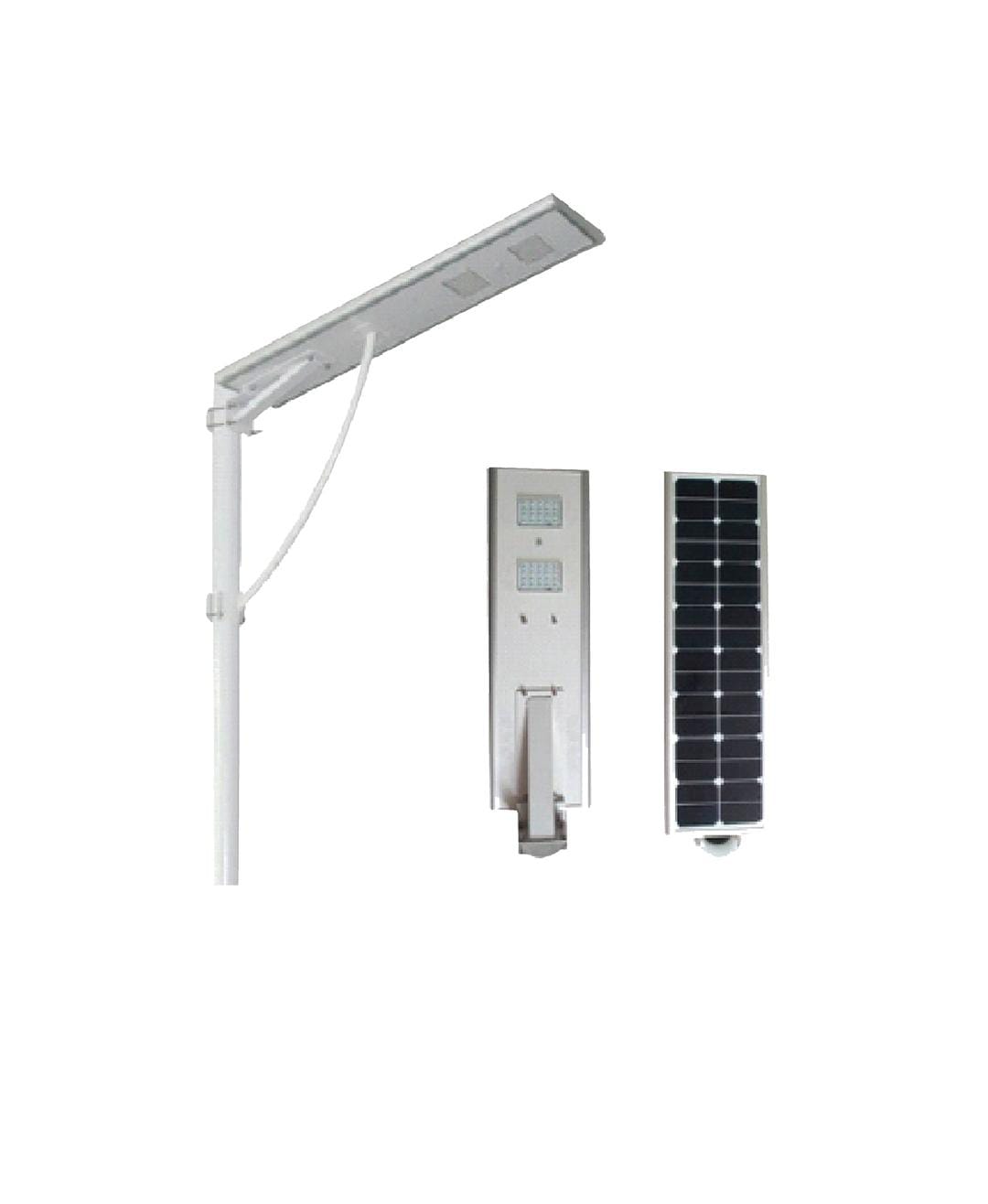
Modern solar street lights are built to be left alone. Sealed IP65/IP66 housings shrug off rain and dust, LiFePO4 batteries tolerate thousands of charge cycles, and there are no bulbs to replace or cables to fault-find. Maintenance usually reduces to wiping the panel a couple of times a year — a task anyone can do with a cloth and a broom handle.
7. Smart Technology Comes Standard
Today's units think for themselves. Microwave motion sensors dim the light when the street is empty and blaze to full brightness the moment someone approaches, stretching battery runtime through long winter nights. Dusk-to-dawn controllers switch everything on and off without you touching a thing, and remote controls let you tune brightness and timers from the ground.
8. A Green Choice You Can Actually Measure
Each solar street light you install offsets hundreds of kilograms of CO₂ every year compared with coal-heavy grid power. For businesses publishing sustainability reports, estates marketing a green lifestyle, and municipalities chasing climate targets, solar lighting is one of the few initiatives that is cheap, visible, and immediately verifiable.
9. It Raises the Value of Everything It Touches
Lit streets lift property values, reduce insurance claims, extend trading hours, and make developments easier to sell or let. Buyers and tenants notice lighting before they notice almost anything else — and solar lighting adds that curb appeal without adding a cent to the monthly levies or utility bill.
So, Should You Make the Switch?
If you pay for electricity, fear load shedding, manage a dark corner of property, or care about the planet — then yes, probably today. Solar street lights have matured from an experiment into the default choice for new installations across South Africa, and the reasons above explain why.
Is Solar Right For You? Check These Five Signs
- Your area experiences load shedding or unreliable municipal power.
- You have dark roads, yards, or boundaries with no cabling nearby.
- Your electricity bill keeps climbing year on year.
- You want security lighting that works even when the grid fails.
- You care about cutting your carbon footprint in a visible way.
Tick two or more? Then solar street lights aren't a luxury for you — they're the logical answer. Browse the Tsoselotsa solar street light range, or request a free quote and let our Cape Town team size the perfect light for your site, your budget, and your winters.